Key Takeaways
- The ISO 27001 gap analysis will compare your current information security practices with the standards set out in ISO/IEC 27001 to find out the deficiencies and provide you with a feasible way to obtain the certification.
- A valuable assessment will consider the scope of your ISMS, risk management process, document control, and relevant Annex A controls rather than just looking for existing policies.
- Prioritisation by risk, ownership, and validation of corrective actions will allow you to build up a better security framework and be ready for the external audit.
Preparing for ISO 27001 compliance is more than writing security policies and purchasing tools. You have to demonstrate that you understand the security risks, have control measures in place, and the processes work reliably.
An ISO 27001 gap analysis is helpful here because it allows the organisation to compare its current situation with the requirements of the standard and to find out what should be improved. It helps management better understand the state of their preparedness to meet the requirements, what resources are needed, and where risks are to be expected.
What Is an ISO 27001 Gap Analysis?
ISO 27001 gap analysis is a systematic assessment of an organisation's present state of information security in accordance with the requirements of ISO/IEC 27001. In this process, the existing practices meeting the standards are highlighted, areas requiring improvement are pointed out, and deficiencies are identified.
This process includes assessing the organisation's ISMS in terms of security policies, risk assessment approach, asset management, access control, incident handling, management of suppliers, and monitoring practices, as well as documenting procedures in line with practices applied in reality.
Gap analysis is not equal to certification and does not ensure certification in any way. It provides a baseline and shows what needs to be done in preparation for an external audit.
Scope is crucial. The business area to be assessed, the service, or the entire operation may be subject to assessment depending on the scope of certification intended by the company. It must take into consideration the relevant sites, systems, people, suppliers, and information flow.
Why Is an ISO 27001 Gap Assessment Important?
The ISO 27001 gap assessment enables organisations to substitute assumptions for evidence. An organisation may have access control policies, for instance, but still give ex-employees access to cloud apps. There is the policy, but it doesn’t function efficiently. The gap assessment helps identify that the document exists, but the control isn’t applied effectively.
The ISO 27001 gap assessment also helps with proper planning. If there is no gap analysis, teams tend to waste time revising the documents while missing the real problems – too many privileges for administrators, insufficient backup tests, or no clear guidelines on the incident response process, for instance.
The findings can help the leadership evaluate what resources will be required to become more prepared. They can also be useful when having a discussion with customers and business partners who expect more assurance from the organisation.
If the company plans to get the certification, then it makes sense to conduct an ISO 27001 gap analysis before getting certified. It provides the opportunity to address weaknesses, gather evidence, and see if the improvement measures work properly. A good ISO 27001 compliance software can be helful here.
How to Perform an ISO 27001 Gap Analysis
A dependable evaluation uses a reproducible procedure. The precise period needed depends on the size, complexity, documentation, and scope being evaluated, but the following are practical steps.
1. Define the ISMS Scope
Establish the scope of the ISMS being reviewed. This means finding out which of the organisation's services, business processes, facilities, systems, and information are included in the scope of the ISMS. Think about dependencies such as cloud-based hosting centres, outsourcing of IT services, and third-party software that deals with corporate and client information.
A too broad scope makes the review very difficult, while a narrow scope may leave systems or processes that are highly important for security out of scope. Make sure that all the stakeholders agree upon the scope of the review.
2. Gather Existing Evidence
List all the current policies, processes, risk register, assets, access reviews, incident information, vendor evaluations, business continuity plan, training, and previous audit findings. If required, obtain technical documentation that includes configuration information, backup test results, and log files showing how security operations are performed.
It must be understood that the document being approved makes it valid. Verify the revision date, ownership, validity of the document, and its usage. Speak with the employees and process owners to confirm that documentation is consistent with the process being performed.
3. Review the ISO 27001 Requirements
Review the management system requirements within the standard, such as organisational context, leadership, planning, support, operations, performance evaluation, and continual improvement. This is what defines the way your ISMS is designed, implemented, and improved.
For your ISO 27001 checklist, you will have to identify the requirements relevant to the selected scope and gather evidence in relation to each of them; for example, define if information security objectives are set, risks are being evaluated, roles are allocated, and internal audits and management review are planned.
Compliance cannot be viewed as a set of separate documents. The requirements work in connection with each other: risk assessment leads to risk treatment, risk treatment defines the required controls, and performance evaluation determines the effectiveness of the whole process.
4. Assess Applicable Annex A Controls
Look at Annex A controls together with your risk assessment and SoA. ISO/IEC 27001:2022 provides 93 reference controls classified according to four categories: organisational, people, physical, and technological. Each organisation decides what controls apply to them according to their risks and chosen risk treatment; these decisions should be documented in the SoA along with justification.
Check for each control to see if it is implemented, operational, and documented. For example, a company may implement multifactor authentication for its administrators, while the same authentication is not provided for other accounts with access to sensitive information.
5. Record and Rate Each Gap
Record all observations in a common format comprising the following parts: requirement or control, current situation, rationale, weakness identified, possible consequences of the weakness, evaluation of the weakness, ownership of the weakness, and action required to address the weakness.
Prioritise the weaknesses based on their likelihood of occurrence and their possible effects. Weaknesses regarding access control within a system containing sensitive customer data should be prioritised over documentation weaknesses. Remember to document your reasons for classifying the risks.
6. Create a Remediation Plan
Make the findings a practical action plan by identifying the accountability owner of each action, setting deadlines, determining the required resources, and identifying how success will be evidenced. Seek to address root cause issues rather than just make cosmetic changes to satisfy the items on the list.
For instance, where access reviews continue to be overlooked because of a lack of the process, then changing the access control policy may not necessarily address the problem. Accountability of the process and review intervals should therefore be considered.
7. Verify Improvements
After the completion of corrective actions, make sure that the modifications are effective. Check updated documentation and settings in the system, some samples of records, and conduct interviews with staff when necessary. Determine if the initial finding is closed, partially addressed, or still open.
Internal auditing is one way to formally verify ISMS compliance and effectiveness. It should be separate from the gap analysis process; the purpose of gap analysis is to define problems, while auditing is a method of checking the system according to audit criteria.
ISO 27001 Gap Analysis Checklist: What to Review
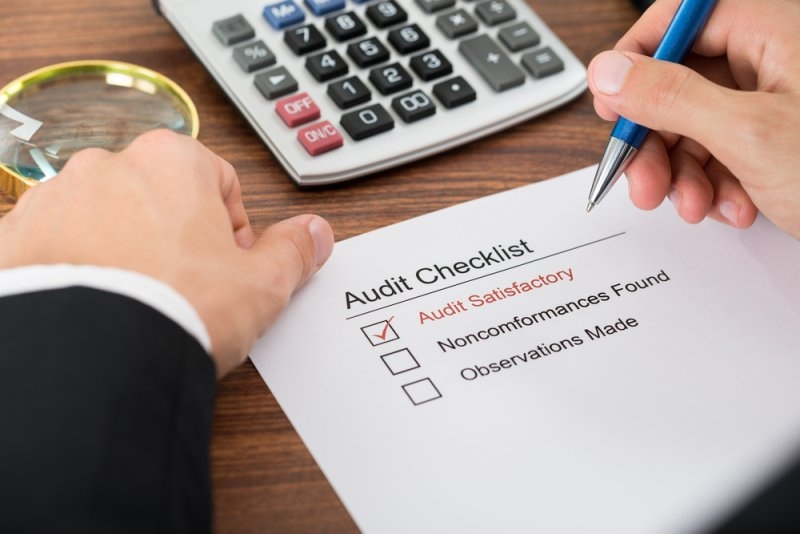
An ISO 27001 compliance checklist helps keep the assessment consistent across teams and business functions. Use the following areas as a starting point, adapting the checks to your ISMS scope and risks.
| Area of assessment | What to check |
| Scope and context of ISMS | Boundaries of the organisation, its stakeholders, associated issues, and dependencies are documented. |
| Leadership and responsibilities | Management’s commitment to security, security responsibilities, and information security objectives are established. |
| Risk assessment and treatment | Risks are identified, assessed consistently, and related to documented treatment choices. |
| Policies and procedures | Documents that are required are current, approved, available, and followed. |
| Asset and access management | Information assets have owners, access is authorised, and access rights are periodically reviewed and revoked if necessary. |
| People and awareness | Employees know about their security responsibilities and get proper training. |
| Incident management | Routes for reporting, responsibilities in responding, records, and lessons learned are established. |
| Supplier security | Third-party risks, contractual obligations, and performance of suppliers are taken into account. |
| Business continuity | Backup and recovery planning is documented and tested as applicable. |
| Monitoring and improvement | Internal audits, management reviews, corrective actions, and performance measurements are planned and documented. |
This checklist is a practical starting point, not a substitute for the full standard. Your assessment should also review applicable Annex A controls and determine what evidence is necessary to demonstrate effective implementation.
How to Use an ISO 27001 Gap Analysis Template
Use an ISO 27001 gap analysis template to make comparisons, document your results, and track your actions in a single space. While a spreadsheet will do the job for a small entity, a more complex setting will require a governance, risk, and compliance platform with capabilities for evidence management and reporting.
You should at least have columns for requirements, controls, current situation, evidence, gap description, risk assessment, action to remedy the problem, owner, deadline, status, and verification notes. Consistent statuses include compliant, partially implemented, not implemented, and not applicable. In case of non-applicability of certain controls, provide your justification and make sure that it is correct according to the SoA.
When documenting evidence, be specific. Avoid statements such as "access control reviewed" by providing exact documentation used as evidence, like an access review report, system configuration, or a sample record.
When looking into the methods for organizing compliance workflows, teams can consider tools like AttestPath.ai. Regardless of the tool chosen, it is important to assign responsibility for each finding and verify evidence validity and relevance.
Common Mistakes to Avoid
A frequent mistake is the tendency to consider the assessment as merely a paperwork exercise. Merely having a policy does not mean that a process is run efficiently, so interviews, technical evidence, and sample documents must be gathered.
It is also unproductive to assess all the controls without any reference to risk or relevance. One should not assess controls for the sake of implementing them but for creating a risk-based ISMS system. Moreover, one must not exclude any control measures due to them being too troublesome or expensive to be carried out.
Finally, one must not close the finding because an action plan was assigned or a new policy was developed. It should only be closed by proving the effectiveness of the implemented action plan.
How to Fix Gaps in ISO 27001 Compliance
A good remediation begins with a prioritization of vulnerabilities. Begin with the higher risks, especially those that may potentially lead to disclosure of sensitive data, disruption of critical systems or processes, or any other serious consequences. Some vulnerabilities will need changes in IT, some procedural, and others will be fixed through clearer responsibilities, improved relationships with the suppliers, or staff training.
For every vulnerability, determine the root cause and take the appropriate proportionate remedial actions. Establish a reasonable deadline, allocate resources, and keep records of all activities performed. For those vulnerabilities that have to do with changes in the behavior of personnel or several departments, ensure that they get to know about their new responsibilities and get trained.
Check up the progress regularly together with the action owner. Upon closure of a particular gap, verify its resolution and keep documentation of this activity. If the problem is still unresolved, then amend the action plan rather than closing and re-opening the same vulnerability time and again.
Also Read: ISO 27001 vs SOC 2: How to Find the Best Security Framework?
Conclusion
The proper gap analysis of ISO 27001 provides an organization with a clear picture of its information security status at present and all efforts that have to be done for conformance to the standard. By properly conducting the scoping process, checking evidence, and evaluating appropriate controls and risks, it is possible to create an action plan for remediation that will contribute to actual security improvements and not only to paper exercises. This procedure needs to be continued during verification, internal audit, and regular assessments while the business evolves.
Frequently Asked Questions
How to identify ISO 27001 compliance gaps?
Compare documented requirements with actual practices, then validate the results using interviews, system configurations, records, and other evidence. Record each weakness, its potential impact, and the action needed to address it.
How long does an ISO 27001 gap analysis take?
The timeline depends on the size of the organization, the complexity of its systems, the scope of the ISMS, and the quality of existing documentation. A focused assessment may take days or weeks, while a complex environment can require considerably longer.
Is an ISO 27001 gap analysis mandatory for certification?
A separate gap analysis is not itself a certification requirement. However, it is a useful readiness exercise because it helps organizations identify weaknesses and plan improvements before the certification body assesses their ISMS.
Who should conduct an ISO 27001 gap analysis?
A knowledgeable internal security or compliance team can conduct the assessment if it understands the standard and has access to the necessary evidence. External specialists can provide an independent perspective when internal expertise or resources are limited.
How to fix gaps in ISO 27001 compliance?
Prioritize findings by risk, identify root causes, assign owners, and set realistic deadlines. Implement corrective actions, retain evidence, and test whether the changes work before marking a gap as resolved. Revisit open issues during regular ISMS reviews.